


Filigree and lattimo are two distinctive techniques in Murano glass.
Anyone exploring Murano glass will quickly notice its extraordinary range of colors, transparency, and decorative styles.
Among the techniques used by Murano glass masters are filigree and lattimo, two very different styles, yet both deeply rooted in tradition.
Understanding the difference between them isn't just a technical detail, it's also a way to recognize the value of each piece and truly appreciate the craftsmanship behind it.
What is filigree in Murano glass?
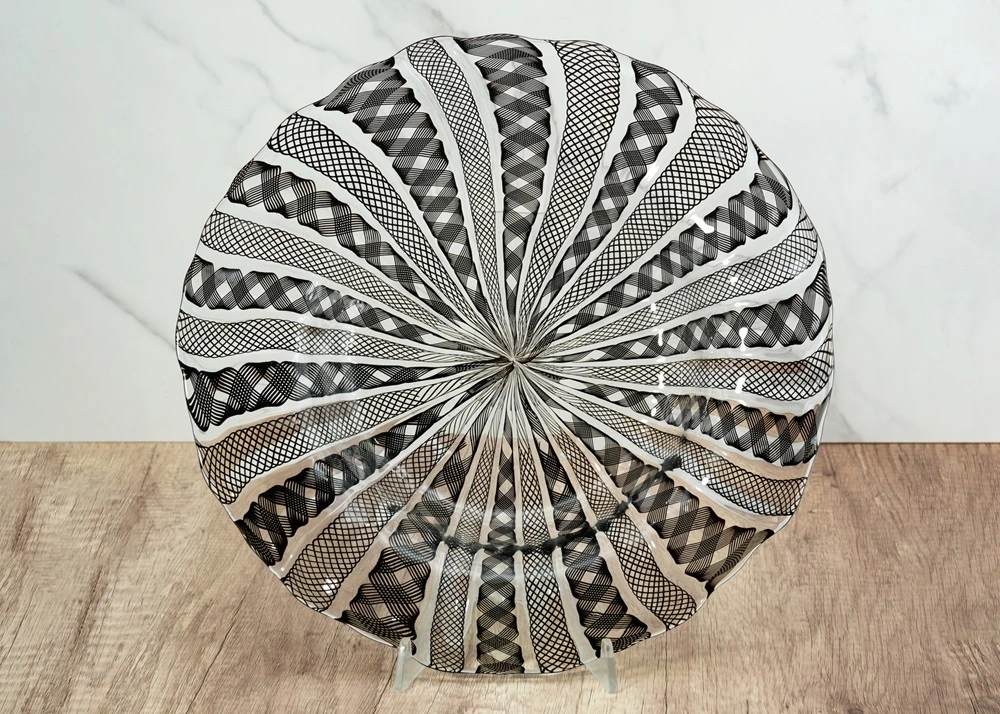
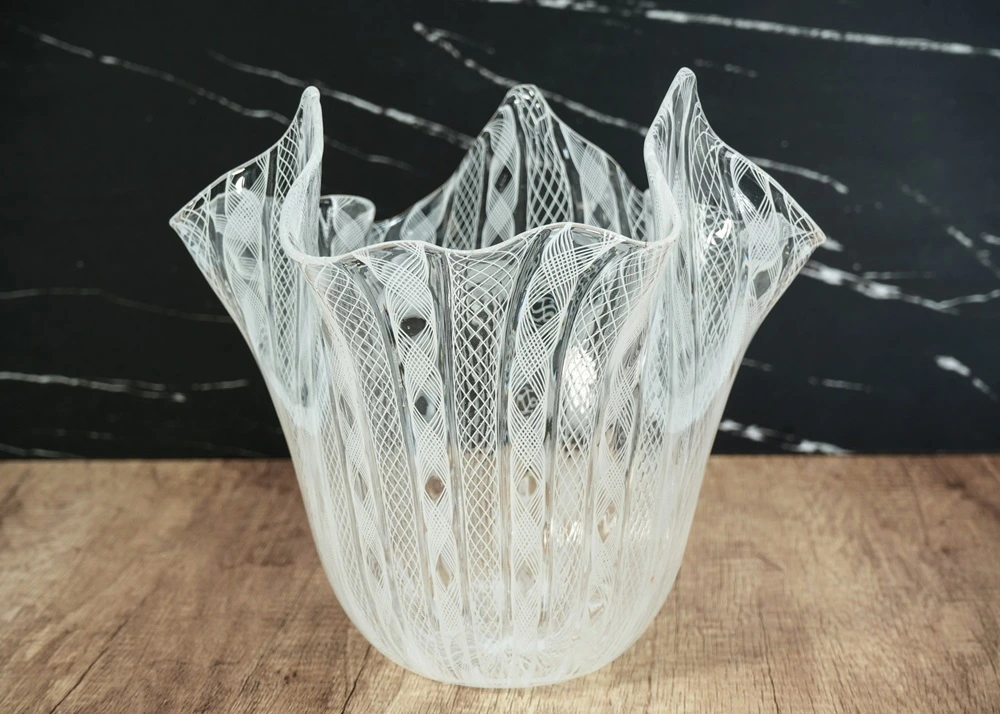
Filigree is one of the most well-known decorative techniques in Murano glassmaking.
It involves embedding thin glass canes within a clear glass body.
These canes, either colored or transparent, are arranged into precise patterns, creating refined and elegant designs.
There are several variations of filigree:
- reticello filigree: crisscrossed patterns forming a delicate net;
- straight filigree: simple, parallel lines;
- spiral filigree: flowing, dynamic twisted patterns.
The result is a light, luminous piece with remarkable detail, where the decoration appears suspended within the glass itself.
What is lattimo?
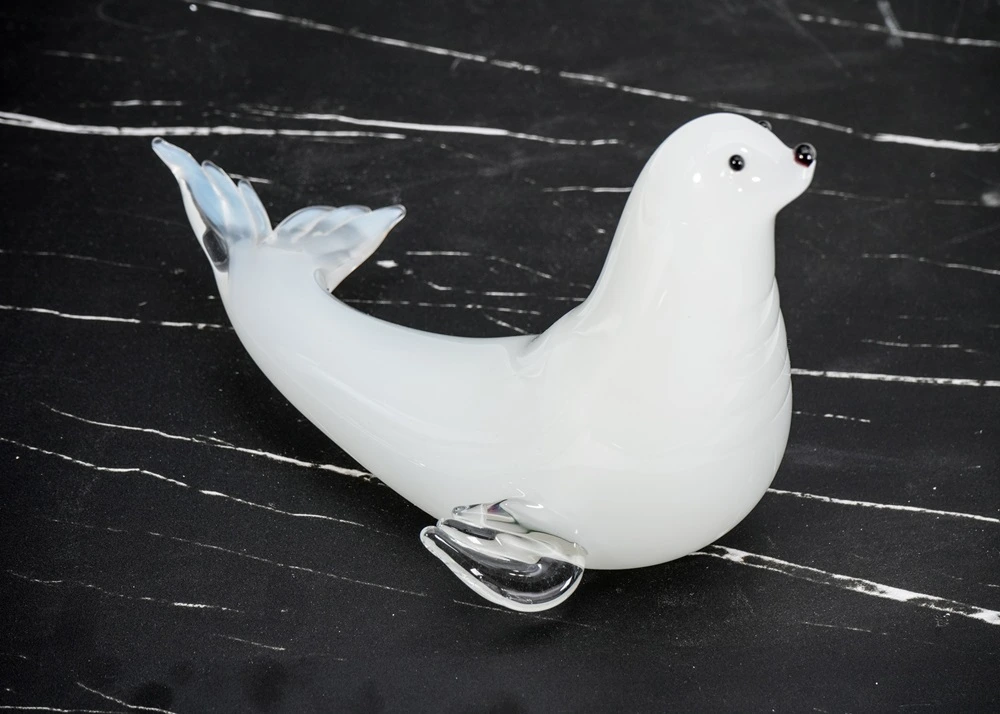
Lattimo, on the other hand, is all about opacity and solid color.
It is a white glass with a milky, porcelain-like appearance, this is where its name comes from.
Originally developed to imitate more precious materials, lattimo has evolved into a distinctive style with its own strong visual identity in Murano glassmaking.
- smooth, opaque surface;
- rich, solid white color;
- often combined with other decorative techniques or colors.
Lattimo creates a completely different impression compared to filigree, more solid, more tactile, almost sculptural.

Main differences
While both are historic Murano glass techniques, filigree and lattimo differ clearly in both appearance and process.
Here are the key differences:
- Transparency: filigree is transparent with internal decoration, while lattimo is opaque;
- Visual effect: filigree interacts with light, lattimo reflects it more evenly;
- Style: filigree is delicate and decorative, lattimo is bolder and more solid;
- Technique: filigree involves embedding glass canes, while lattimo is created through a specific glass composition.
Two completely different approaches, yet both express the excellence of Murano craftsmanship.
In some cases, these techniques are even combined within the same piece, creating more complex and fascinating effects.
Two techniques, one tradition
Filigree and lattimo represent two completely different ways of working with glass. On one side, filigree is light, transparent, almost weightless. On the other, lattimo is richer and more substantial, with a strong visual presence.
This isn't about quality, it's about personal taste and style.
Some are drawn to the delicate elegance of filigree, while others prefer the strength and solidity of lattimo.
Ultimately, what truly matters is how these techniques are crafted.
Behind every piece lies the hand of an artisan, along with creativity and years of experience.